


Laminate flooring sits at the top of most New Zealand homeowners’ lists for good reason. It looks the part, handles real daily use, and costs considerably less than real wood. What catches people off guard is the assumption that low maintenance means it can tolerate any cleaning approach. That assumption is where most floor damage starts.
Laminate has genuine sensitivities, particularly to water and the wrong products. If you’ve been searching for how to clean laminate flooring NZ the correct way, this guide covers the tools, the process, the pitfalls, and the maintenance habits that keep your floor in good shape for the long run.
What Is Laminate Flooring & Why Does It Need Special Care
Laminate flooring is a layered engineered product built to replicate the look of timber. A photographic surface layer sits over a high-density fibreboard core, all protected by a clear coating that takes the wear of daily foot traffic. Unlike real wood, it cannot be sanded back or refinished when damaged, which means surface deterioration is largely permanent.
The two things laminates cannot tolerate well are sustained moisture and aggressive chemical exposure. Excessive water works into the seams and causes the fibreboard core to swell and buckle. Harsh chemicals and abrasive cleaners wear down the protective coating, dulling the floor’s appearance in ways that don’t recover. Good laminate floor maintenance is about cleaning effectively without triggering either outcome.
Essential Tools & Supplies for Cleaning Laminate Floors
The right cleaning tools matter more with laminate than with most other floor types. Using the wrong ones during routine cleaning is one of the more common ways the surface gets gradually degraded.
A microfiber mop is the most important item to have. It lifts loose dirt and fine particles without scratching, and it holds only a small amount of moisture, which suits laminate flooring well. Before any damp mopping, always dry sweep or vacuum first with the vacuum on its hard floor setting to clear grit from the surface.
For the cleaning solution, choose a product made specifically for laminate flooring, or use a simple diluted mix of white vinegar and warm water. Products that are foam-based, heavily fragranced, or soap-heavy leave a residue that builds up on the surface over time and progressively dulls the finish in ways that are hard to reverse.
Step-by-Step Guide to Cleaning Laminate Flooring
A repeatable, careful routine is the best way to clean laminate without causing wear. Working through the steps in order protects the surface and gives a consistently clean result.
Step 1 – Clear the area and dry sweep: Move furniture or smaller items aside, then sweep or vacuum the entire floor on the hard floor setting to remove all loose dirt and grit before any moisture is introduced.
Step 2 – Prepare your cleaning solution: Mix your chosen cleaning solution with warm water, keeping the ratio on the lighter side. The goal is dissolving surface grime, not soaking the floor.
Step 3 – Wring the microfiber mop properly: The microfiber mop should feel barely damp when it meets the surface. If water can still be wrung from it, it needs another wring. Too much water reaching the seams is the most common cause of lasting laminate damage.
Step 4 – Mop in manageable sections: Work across the room in the direction of the planks. Rinse and wring the mop regularly so you’re moving a clean solution across the floor, not redistributing dirt.
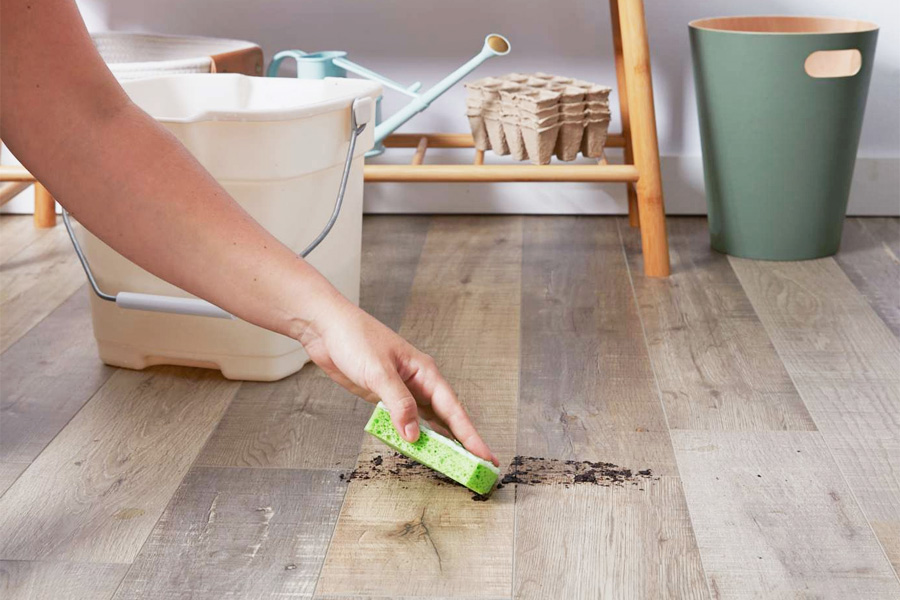
Step 5 – Treat stubborn spots with care: For sticky marks or localised staining, apply a small amount of cleaning solution to a cloth and work on the spot directly. Pouring any liquid straight onto the floor should always be avoided.
Step 6 – Allow the floor to dry fully: Let the surface air dry before walking on it or moving furniture back. Don’t rush this step.
Common Mistakes to Avoid When Cleaning Laminate Floors
Understanding the common mistakes matters as much as knowing the right technique. Some of the most damaging habits are ones people repeat confidently, without realising the cumulative effect on their laminate flooring.
- Using a steam mop or steam cleaners is one of the worst things for laminate; the heat and forced moisture penetrate the seams and cause warping that cannot be undone
- Applying too much water during mopping, even with an appropriate cleaning solution, saturates the seams gradually and weakens the core over time
- Reaching for abrasive cleaners or scouring pads scratches the protective coating and leaves marks that are permanent
- Using oil-based polishes or wax products creates a surface buildup that attracts more dirt rather than repelling it
- Skipping the dry sweep before mopping drags grit across the floor, producing fine scratches that accumulate into visible surface dullness
Best Practices for Long-Term Laminate Floor Maintenance
Good laminate floor maintenance extends well beyond the cleaning routine itself. A handful of consistent protective habits make a meaningful difference to how long the floor holds its finish.
Fit felt pads under all furniture legs and replace them once they compress or wear down, since a worn pad offers little protection. Use entry mats at external doors to stop grit from reaching the laminate surface. In hallways and busy areas, a well-placed rug reduces concentrated wear that shortens a floor’s life. For households with pets, keeping nails trimmed regularly limits the scratching that even careful cleaning cannot undo.
Humidity is worth paying attention to as well. Laminate flooring responds to changes in indoor moisture levels by expanding and contracting; sustained fluctuations cause gapping, lifting, and in serious cases, buckling. A stable indoor environment protects both the floor’s appearance and its structure over the longer term.
DIY vs Professional Laminate Floor Cleaning
A solid DIY routine handles most laminate floor maintenance well throughout the year. There are circumstances, though, where professional cleaning produces a result that careful home care simply cannot replicate.
|
Factor |
DIY Cleaning |
Professional Cleaning |
|
Cost |
Low |
Higher upfront |
|
Frequency |
Weekly or fortnightly |
Every 6 to 12 months |
|
Equipment |
Microfiber mop, basic supplies |
Commercial-grade tools |
|
Results |
Good for regular upkeep |
Deep clean, restored finish |
|
Risk of damage |
Higher without the correct products |
Minimal with trained technicians |
|
Best for |
Routine laminate floor maintenance |
Ingrained grime, dull surfaces, pre-sale prep |
When your best efforts at home stop producing the finish your floor should have, or when a property needs to be prepared for sale or tenancy, professional floor cleaning is the practical choice. Our cleaning services in Christchurch cover both residential and commercial laminate flooring to a standard that routine cleaning cannot reach. For surfaces that would benefit from protective treatment, our floor sealing service in Christchurch adds a durable layer that meaningfully extends the life of your floor.
Conclusion
Laminate flooring is genuinely low maintenance when it’s cared for correctly. The right cleaning solution, a properly wrung microfiber mop, and a consistent routine that avoids steam cleaners, abrasive cleaners, and excessive water are all it takes to keep the surface looking sharp for years.
When routine cleaning reaches its limits, professional laminate floor maintenance is the logical next step. Get in touch to find out how our team can restore and protect your laminate flooring.
Frequently Asked Questions
Can you use vinegar on laminate floors?
Diluted white vinegar in warm water is a practical and effective cleaning solution for laminate flooring. Used at full strength, though, vinegar is acidic enough to dull the surface coating over time. Always dilute it, and always make sure the microfiber mop is thoroughly wrung before it touches the floor.
Can laminate flooring be steam cleaned?
No, and it's worth being clear on this. Steam mop and steam cleaners should never be used on laminate flooring. The heat, combined with forced moisture, penetrates the seams and swells the fibreboard core; the resulting buckling is not repairable and often means full floor replacement. A damp microfiber mop with the right cleaning solution is always the correct approach.